Notes on a trip to China
In September 2025 my wife and I spent just over 3 week in China, her first time back to her home country in 2 years and my third trip there, having been in 2017 and 2018. We spent most of our time in my wife’s home city of Chengdu, while also visited the nearby cities of Chongqing and Guiyang. This post is a collection of my thoughts and opinions on the places we visited, along with some photos I took during the trip.
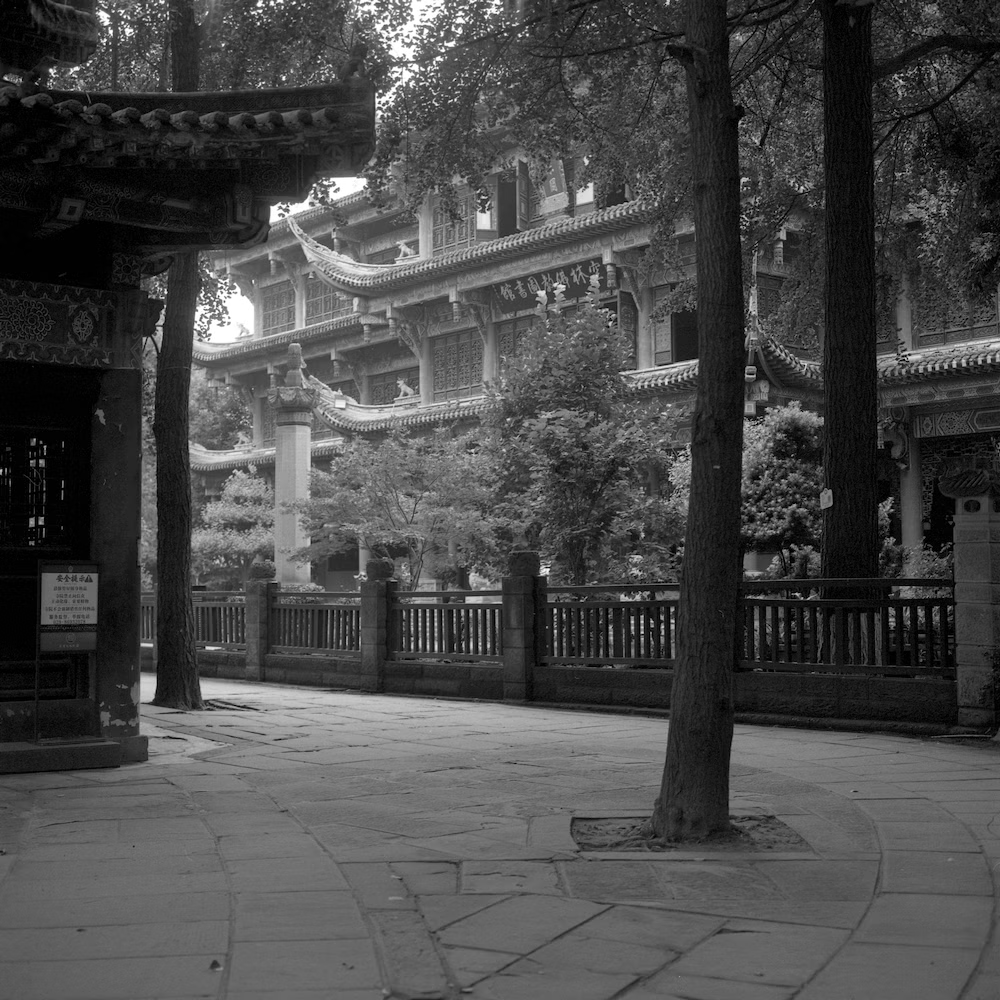
文殊院 Wenshu Temple, Chengdu
Chengdu
When I first went to Chengdu in 2018 I wasn’t very interested in the place, it’s very flat and generally lacking in visual interest, but I did meet my wife there so I do have a bit of a soft spot for the place. When I travel alone I tend to spend most of my time just exploring and looking for interesting areas to photograph, and Chengdu isn’t great for that. Going back with my wife was much different, she knows all the best spots and between her missing the food she’d grown up with and me having more of an interest than I did last time, we spent a lot of time eating.
Chengdu is, in my mind, the best food city in the world when it comes to native cuisine, not that I’m claiming to be an expert in this regard. My favourites were: 甜水面 Tian Shui Mian, thicky chewy noodles with a delicious spicy sauce1 – 钟水饺 Zhong Shuijiao, simple pork dumplings with a different but equally delicious spicy sauce2 – and of course 火锅 Huo Guo, or hot pot, where you get a big pot of spicy broth on a burner in the middle of your table and a selection of meats and vegetables to cook in it.3
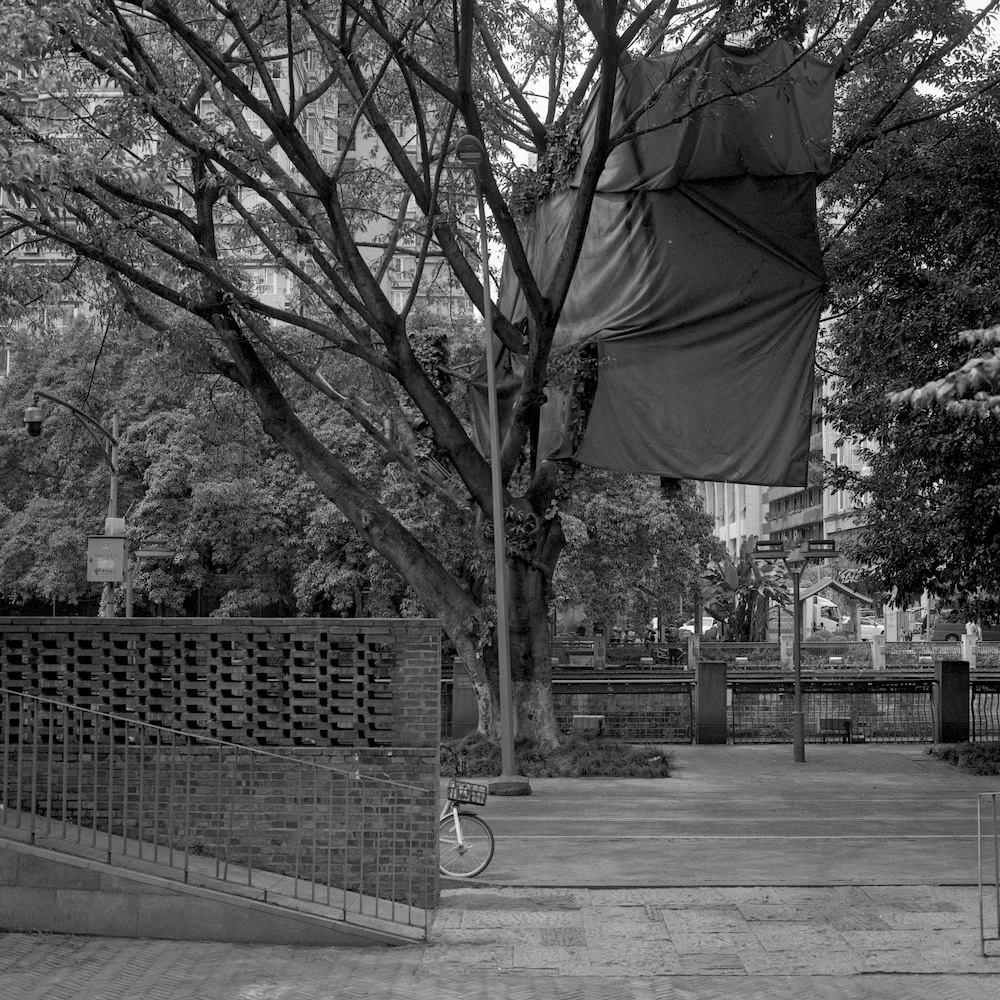
均隆滨河路 Junlong Binhe Road, Chengdu
There’s also a recent boom of nice coffee shops and really good coffee in Chengdu. It’s not hard to find a specialist coffee shop, they almost always have a choice of beans, and that choice almost always includes a sour and fruity light roast which made me very happy – my top recommendation is agua café.4 I found walking around Chengdu, particularly in the area near where we stayed, around the 牛王庙 Niuwangmiao metro station, I was constantly seeing nice looking restaurants, coffee shops, and bars that I wanted to visit. I have the same experience every time we visit Paris.
Getting around Chengdu is easy. The street layout feels like it was built with the superblocks5 idea in mind. There’s something of a grid of large roads, and inside the blocks created by this grid are a maze of smaller much quieter streets which are much more pleasant to walk on, if you can find a reasonable route through. Crossing these large roads is a frustrating experience. First you have to get across the slip lane with limited visibility around the corner and where no cars will stop for you, then you’re waiting multiple minutes on the island with no shade and surrounded by people on scooters until you get to cross. On the other hand, Chengdu’s metro is amazing, the coverage is very good, the platforms tend to be very close to ground level so it’s quick to get to the trains, and it’s very fast and frequent.
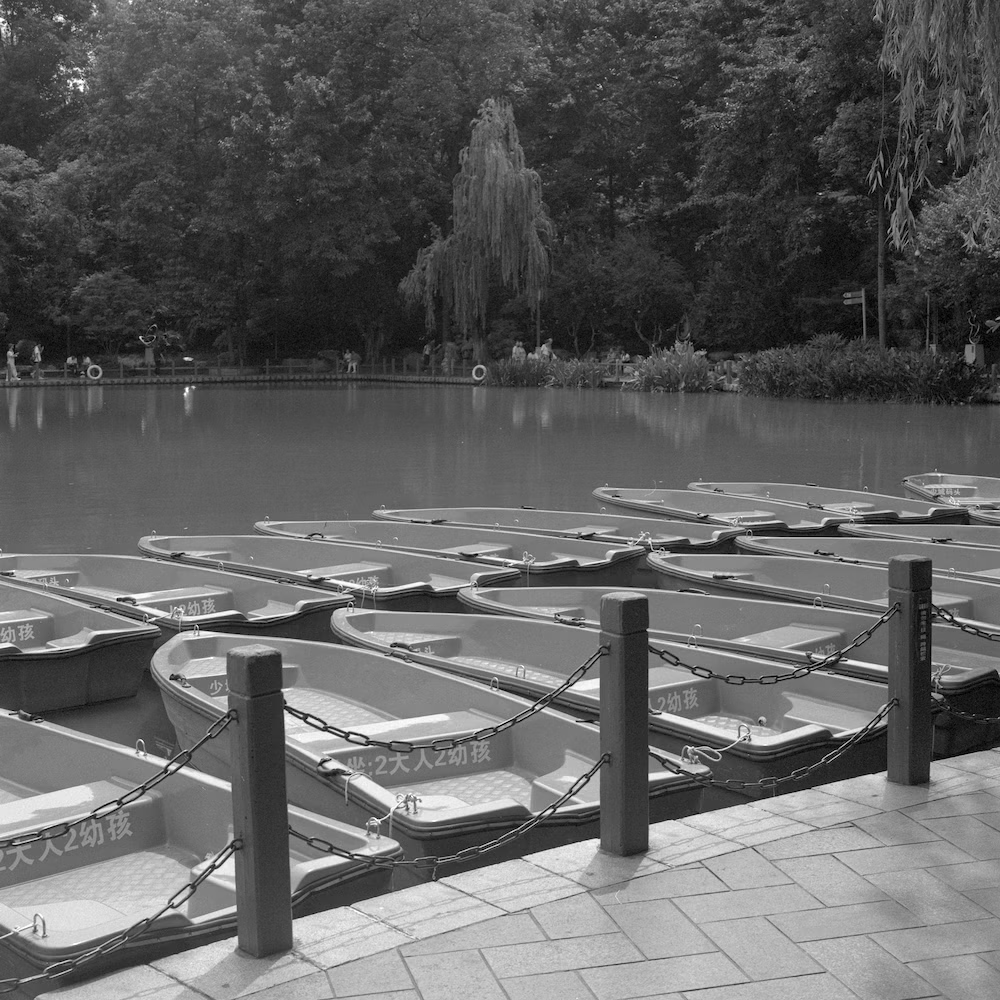
人民公园 People’s Park, Chengdu
The Train
There’s not much to complain about with China’s high speed rail system. The headline being the high speed, we took a train from Chengdu East Station to Shapingba in Chongqing, travelling 299km in 62 minutes, which means we averaged almost 300km/h. I also liked how my wife was able to choose seats before booking our tickets, which meant if we weren’t able to get seats next to each other, we could just travel at a different time – and, we didn’t try this, but you can order food from a restaurant near a station you’re stopping at to be delivered to your seat.
I’m not a fan of the more airport like experience of the stations. They tend to be further towards the edge of the city, albeit much closer than an airport and of course well connected by metro. You have to go through some security theatre to get into the station which is annoying, especially for me carrying film that I’d like to avoid putting through the scanners (that said, they were always happy to hand check it when asked). The check does tend to be quick and I never saw much of a queue. The waiting area is usually a huge hall with a selection of shops, quite a bit of seating, and rows of escalators to get down to platform level. You can only go to the platform shortly before your departure, so there’s another queue to wait in and crowd to navigate to scan your ticket and board.
Chongqing
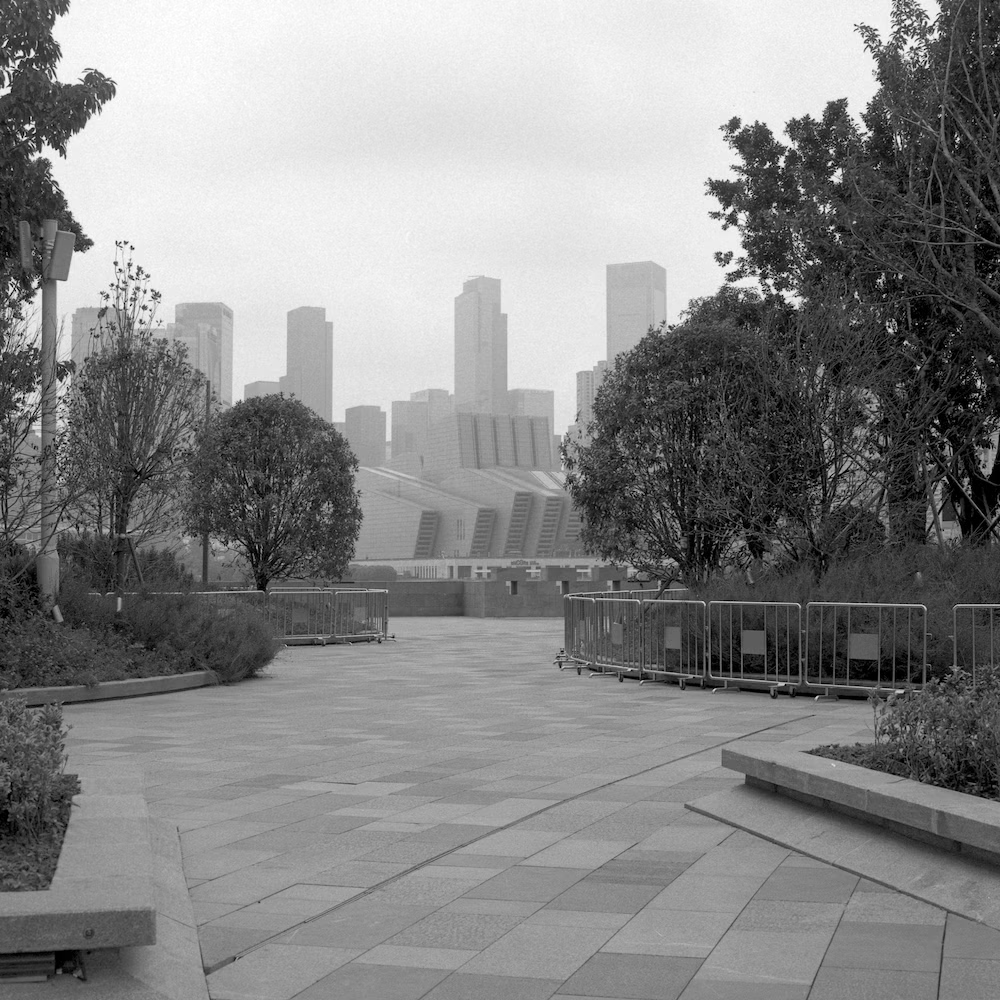
朝天门广场 Chaotianmen Square, Chongqing
On my previous visit to Chongqing in 2018 I was really taken by the city. It is, at least in terms of urban form and landscape, the total opposite of Chengdu. Chongqing is a huge city built on almost mountainous terrain, at the confluence of two large rivers. It often feels like everything is built on top of everything else, you can be on the ground floor on one side of a building and the 20th floor on the other side. I enjoy photographing how human infrastructure interacts with nature and Chongqing is full of interesting examples of this.
During this visit I had less time to explore the odd corners of the city, but we still got around a good bit. We repeated a walk I had done previously, going from 李子坝 Liziba station (where the monorail passes through an apartment building, which was very quiet in 2018 but now a busy tourist attraction) up a steep hillside the eventually make it to the pagoda at the top of 鹅岭公园 Eling Park. The route took us up steep sets of stairs past some abandoned buildings, then into a wealthier hilltop neighbourhood, and finally the park. For me, Chongqing is a city to be explored on foot, there’s constantly cool things to see and the terrain gives you interesting vantage points from which to see them. This can, however, be a bit less fun when you consider the weather. It can get very hot and very humid in Chongqing, it’s considered one of China’s oven cities. When we were there in September it mercifully stayed in the low 30s, but that heat combined with seemingly having to walk uphill to get anywhere can be pretty brutal.
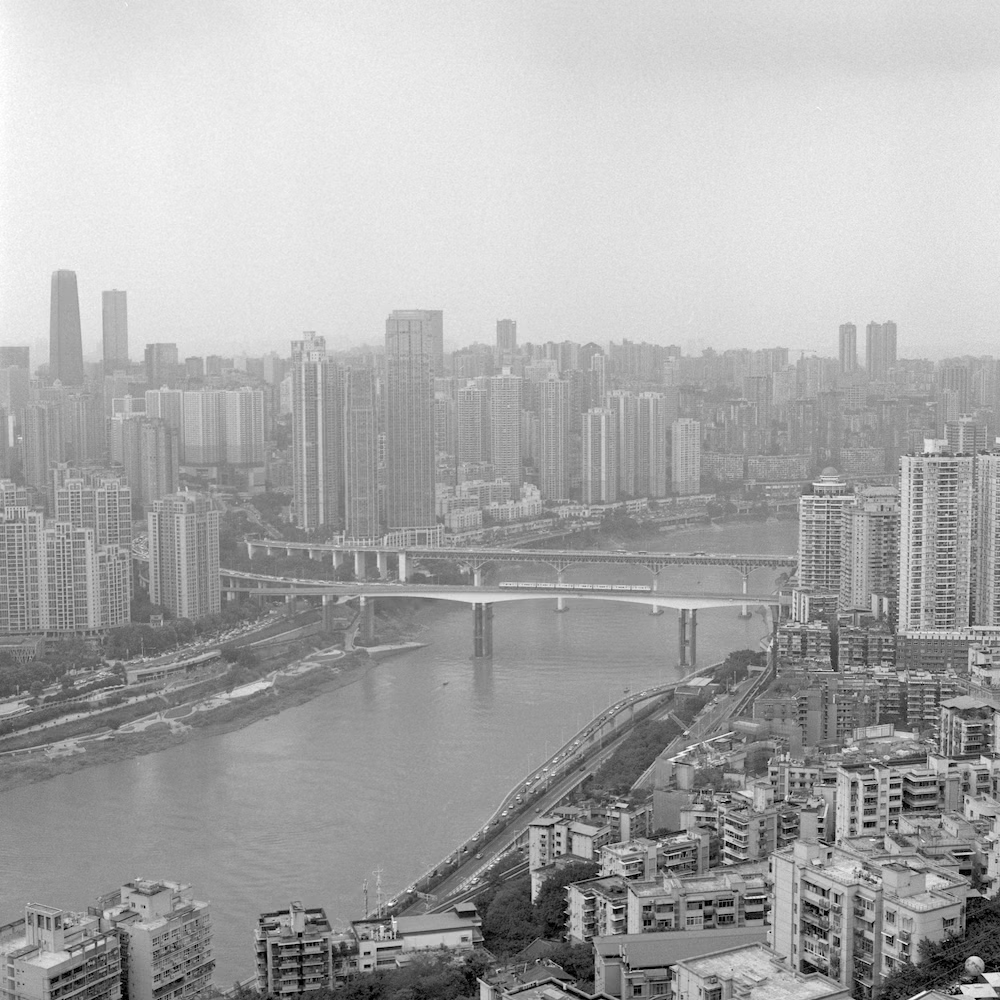
嘉陵江 Jialing River, Chongqing
Finding nice coffee in Chongqing wasn’t so easy, multiple places we found online and tried to visit weren’t open when they said they were, which sometimes meant quite a bit of walking around in the excessive heat. The best spot we found was Guaguajun coffee on Daijia Alley, which also had a great view over the Jialing River.
Chongqing has a huge metro system, including two monorail lines. Line 2 is particularly scenic, following the south bank of the Jialing River for a section. It can often still take quite a bit of effort to get to a train, with deep stations and long corridors for transferring between lines, another impact of the terrain. One station we visited, 红土地 Hongtudi, took 6 escalators to get down to platform level, and that’s not even the deepest. We went to Hongtudi to experience another form of physical punishment enjoyed by Chongqingers – their brutally spicy and mouth-numbing hot pot. Specifically for a hot pot restaurant in a 500m long air raid shelter built during WWII.
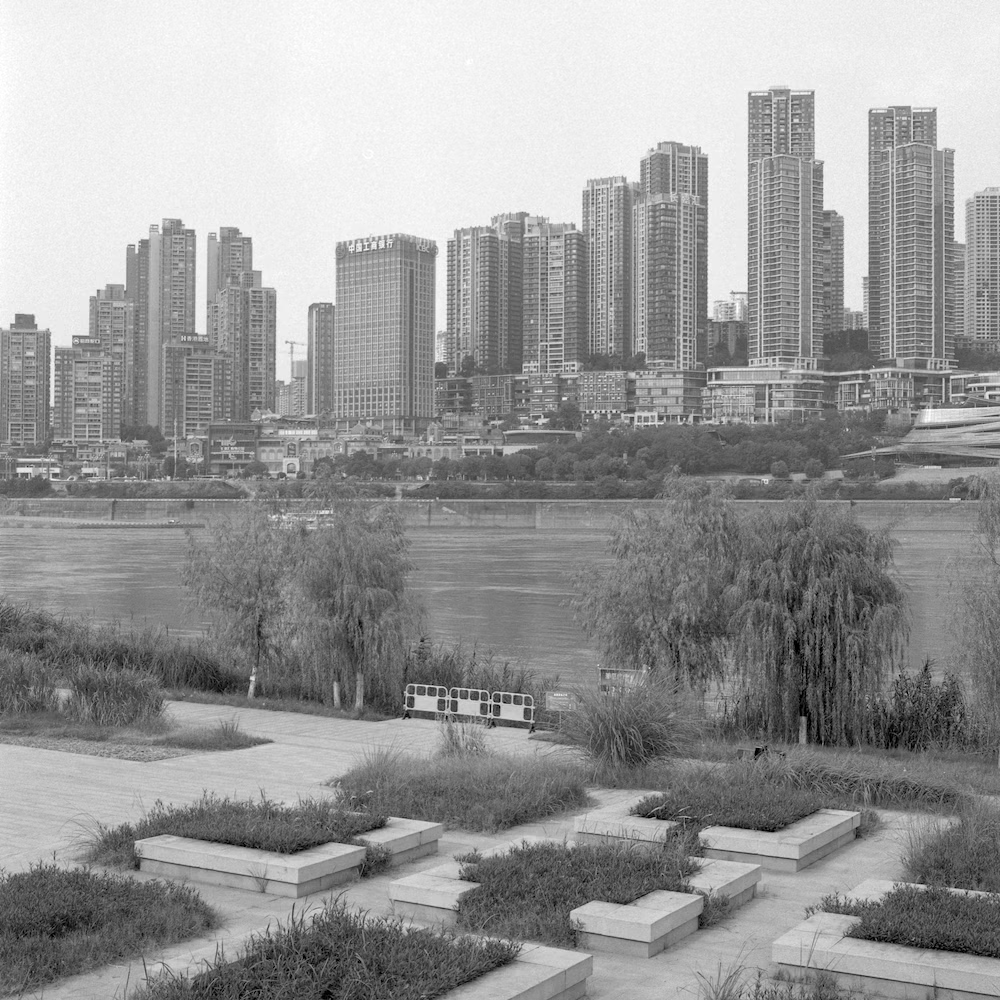
长江 Yangtze River, Chongqing
Guiyang
Guiyang is the only city we visited on this trip that I hadn’t been to before. It’s significantly smaller than the other two cities, with just 4.5 million people, compared to 16 and 11 million in Chengdu and Chongqing. I also generally found it the least interesting of the three. Guiyang is built on hills, but nowhere near to the degree that Chongqing is, so it doesn’t really give the same sorts of views. The streets are much narrower than those in Chengdu and it doesn’t have the same sort of super-block structure, but the streets are still very car oriented so you end up with a pretty poor pedestrian experience. What is interesting is the proliferation of pedestrian underpasses, which exist under many four-way junctions around town, and these are often full of shops. This is nice as it lets your briefly avoid the heat and not have to wait to cross, but to me it just reinforces the feeling of being second class compared to cars.
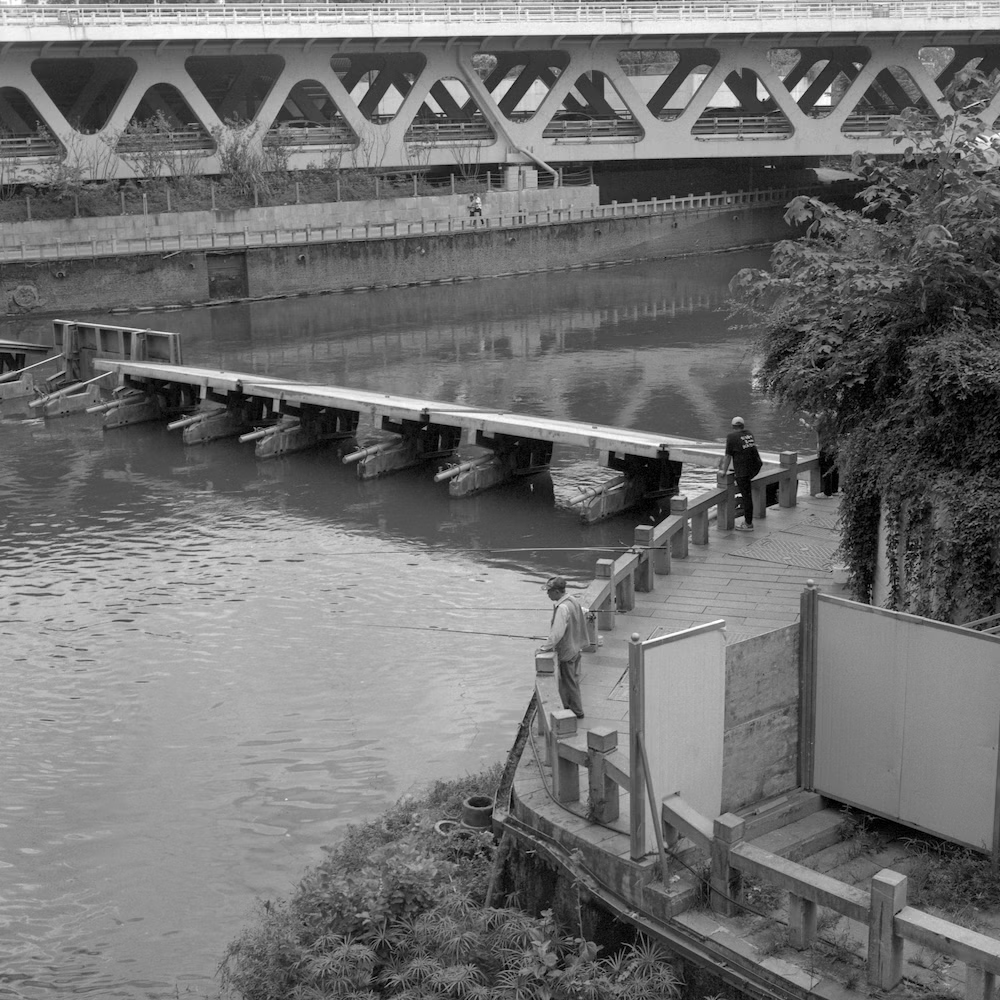
南明河 Nanming River, Guiyang
The reason to visit Guiyang is the food, it has a very distinct cuisine compared to Chengdu and Chongqing (and the rest of China). We tried sour noodles, which came with a bucket of raw, unpeeled garlic cloves on the table for you to chew on – multiple different types of hot pot that I hadn’t heard of before, one with a bean flavoured soup base and another that was mostly just a big pot of tomatoes and chicken – and the highlight was 烙锅 Lao Guo, which is conceptually similar to hot pot except instead of a pot of hot broth you have a large pan on which to cook your various meats and vegetables, with a bowl of spicy dip in the centre.
Guiyang also has a lively specialty coffee scene, but at least in the short time we spent there I didn’t find any coffee I liked as much as what we were having in Chengdu. We queued outside Captain George5, the pioneer of specialty coffee in Guiyang, and tried to visit DuiDe Coffee each morning only to find it with a large queue each time until the third day. For me neither lived up to the hype.
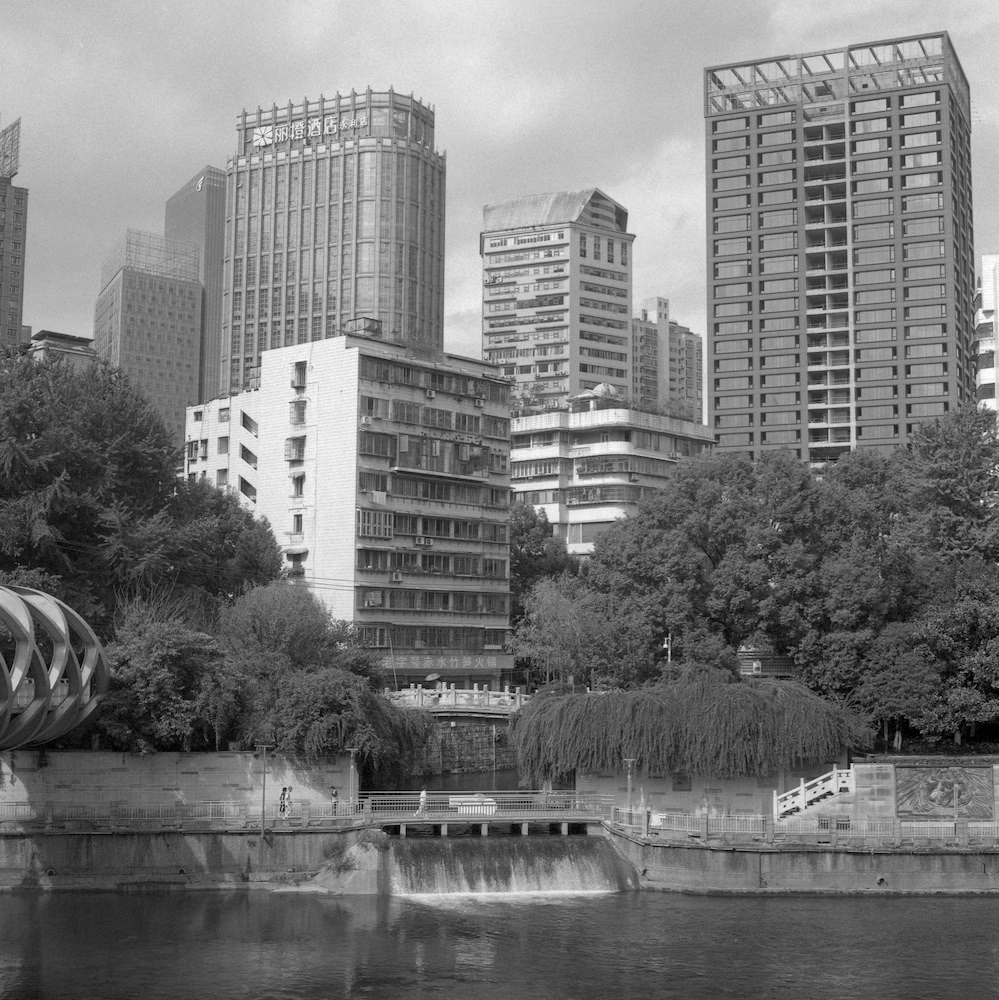
南明河 Nanming River, Guiyang
Parting Thoughts
We had a great time on our trip, I particularly enjoyed Chengdu and would love to go back, I still feel like there’s a lot more exploring to do in Chongqing, and I’m very glad we went to Guiyang but I don’t think I’d go out of my way to return.
All the photos in the post were shot on my Hasselblad 501c with an 80mm f/2.8 CB lens using Ilford HP5+ shot at ISO 800 and developed in Ilfotec HC 1:49 for 11 minutes. I scanned them with an Epson V800 and edited them in darktable.
With thanks to my wife for making the trip what it was, as well as for helping me put together this post.
See We Tried China’s Iconic Sichuan Sweet Water Noodles – Bon Appétit https://www.youtube.com/watch?v=zVFcNCsiZII ↩︎
See The Legendary Chinese Dumplings Served in an Auntie’s Living Room – Bon Appétit https://www.youtube.com/watch?v=i_y-Eg2xX_M ↩︎
With a hot pot, you’ll also always have your own little customisable dip bowl, and my tip for if you’re like me and not great with spice is to fill it mostly with vinegar, this really helps to manage the spiciness. ↩︎
Superblocks are an urban planning concept, in which city blocks are combined together, allowing traffic to flow around, but only cars heading to a destination within the superblock are allowed to drive in. The concept is usually associated with it’s implementation in Barcelona. ↩︎ ↩︎